

Building healthy habits after limb loss is not about creating a perfect routine, exercising every day, or forcing yourself to stay positive. Life as an amputee can change from one day to the next. Energy levels shift, residual limb volume can change, prosthetic comfort may vary, and pain or fatigue can make yesterday’s routine feel unrealistic today.
That is why healthy habits for amputees need to be flexible enough for real life. The best habits protect your body, support mental health, simplify prosthetic care, and reduce daily decision-making.
This connects with Lifelong Prosthetics’ Amputee Daily Wellness Method: notice what you need, then choose a manageable action. A lasting habit should support your life, not make it more demanding.
Healthy Habits for Amputees Start With Small, Repeatable Actions
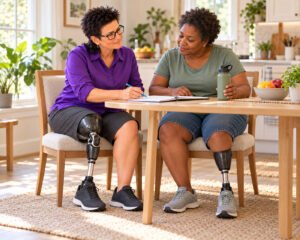
A common mistake is trying to change everything at once. You may decide to exercise more, drink more water, sleep earlier, improve your diet, organize prosthetic supplies, journal, and stretch every day. The plan sounds healthy, but the effort required can make it difficult to continue.
Healthy habits for amputees are easier to maintain when they begin with one small action. That might mean checking your skin when you remove your prosthesis, filling a water bottle at breakfast, stretching for five minutes after getting dressed, or placing tomorrow’s prosthetic socks beside your shoes before bed.
Connect a new habit to something you already do. Take medication with your first glass of water, inspect your residual limb after your shower, or pause before putting on your prosthesis. Once the action feels familiar, add another step. Daily Self-Care for Amputees offers more ideas for pain, energy, mobility, and everyday independence.
The important point is that a habit should feel repeatable. Something small that you can continue for months is often more valuable than an ambitious routine that lasts only a few days.
Build Healthy Habits for Amputees Around a Daily Body Check
One of the most valuable habits after amputation is noticing changes before they become larger problems. A daily body check can take only a few minutes, but it can influence how you plan the rest of the day.
Ask yourself: How is my skin? How does my residual limb feel? Is the socket comfortable? Am I more tired than usual? Is there swelling, irritation, unusual pressure, or a change in pain? How is my sound limb feeling?
For people who use a prosthesis, daily skin awareness is especially important. Veterans Affairs guidance recommends regular residual-limb hygiene and daily skin inspection, including checking areas that may be difficult to see. (Veterans Health Library)
The goal is to learn your usual patterns so meaningful changes are easier to recognize. Persistent redness, open skin, drainage, unusual swelling, sudden pain, or a significant fit change should be discussed with your prosthetist or healthcare provider.
Some days support more activity; others call for rest, a mobility aid, or a lighter schedule. Responding to your body is part of a healthy lifestyle after amputation.
Over time, this simple habit can also help you explain changes more clearly during prosthetic and medical appointments because you are paying attention to patterns rather than trying to remember everything afterward.
Make Movement a Consistent Part of Your Amputee Wellness Routine
Movement can support strength, cardiovascular health, balance, confidence, and independence, but it should match your health, ability, prosthetic use, and current conditioning.
The U.S. Office of Disease Prevention and Health Promotion says regular physical activity benefits people with disabilities and encourages people to start slowly, choose activities that work for them, and build up over time. Even small amounts of activity can be useful. (Health.gov)
Movement might include walking, wheelchair mobility, seated exercise, resistance training, stretching, swimming, balance work, or therapist-recommended exercises.
Create a “minimum movement habit” for lower-energy days. Five minutes of stretching, one strengthening set, or a short indoor walk can still count. On better days, do more.
This approach keeps movement from becoming an all-or-nothing decision. Missing a full workout does not mean you need to abandon movement for the entire day.
Safety matters too. Terrain, lighting, footwear, fatigue, and prosthetic comfort can influence how secure movement feels. Why It’s Okay to Look Down explains why visually checking unfamiliar or uneven surfaces can be a practical mobility strategy for leg amputees.
If you are unsure what activity is safe after surgery, a fall, a health change, or a period of inactivity, speak with your healthcare or rehabilitation professional.
Support Healthy Habits for Amputees With Better Sleep and Recovery
Sleep can affect energy, concentration, mood, motivation, and daily problem-solving. When sleep is poor, prosthetic care, mobility, exercise, and emotional regulation can all feel more difficult.
The CDC says adults generally need at least seven hours of sleep, with recommendations varying by age. It also recommends habits such as keeping a regular sleep schedule, creating a quiet and comfortable sleep environment, limiting electronics before bed, and avoiding caffeine later in the day. (CDC)
Phantom sensations, residual limb discomfort, medication schedules, stress, or positioning can also interrupt sleep. A rigid bedtime rule may not solve these issues, but a predictable wind-down routine can help.
Choose a few evening signals: organize prosthetic supplies, dim the lights, put your phone away, and prepare for morning. Daytime recovery matters too; short breaks can preserve energy before exhaustion takes over.
Rest does not have to mean giving up on the day. Sometimes a planned twenty-minute break makes it easier to complete an activity later without reaching the point of physical or mental overload.
When sleep problems continue despite reasonable changes, especially when pain or other symptoms are involved, discussing them with an appropriate healthcare professional is important.
Create Simple Nutrition and Hydration Habits That Fit Real Life
Healthy eating should not become another complicated project. A sustainable nutrition habit needs to work on busy days, painful days, and days when cooking requires more energy than expected.
Keep the approach simple. Include practical sources of protein, fruits or vegetables, whole grains, and other nutrient-dense foods that fit your preferences and medical needs. Preparing extra portions on higher-energy days can make future meals easier. The USDA’s MyPlate offers a general balanced-meal framework. (MyPlate)
Keep water accessible and connect drinking to meals, medications, or breaks. If you sweat heavily in a prosthetic socket, exercise in heat, or take medication that affects fluid balance, ask a healthcare professional about your needs.
Diabetes, kidney disease, heart conditions, wound healing, medications, and weight goals may require individualized nutrition guidance.
You can also make healthy choices easier by arranging your environment around your energy level. Keep simple meal ingredients where they are easy to reach, use adaptive kitchen tools when useful, and prepare food while seated if standing for long periods is uncomfortable.
The goal is not perfect eating. It is making supportive choices easier to repeat.
Protect Your Prosthetic Routine and Residual Limb Care
Prosthetic care works best when it becomes part of ordinary daily life instead of something you only think about when a problem appears.
Keep liners, socks, sleeves, chargers, skin-care products, mobility aids, and backup supplies in predictable locations. Preparing the next day’s essentials before bed can reduce the number of decisions you need to make in the morning.
Residual limb hygiene should also become a regular habit. VA guidance emphasizes daily limb care, keeping skin clean and dry, and inspecting the residual limb for changes. (Veterans Health Library) Follow the cleaning instructions given by your prosthetist and the manufacturers of your prosthetic components.
Pay attention to patterns. If the socket becomes uncomfortable at the same time daily, you frequently change sock ply, or one area keeps becoming irritated, write it down. These notes can improve conversations with your prosthetist.
Do not ignore repeated pain or skin breakdown. If you are unsure whether a change comes from your body or device, involve your care team.
Lifelong Prosthetics’ amputee coaching support can also help you organize questions and observations, prepare for appointments, and communicate more clearly without replacing the role of your prosthetist or healthcare providers.
A successful prosthetic routine should ultimately help reduce unnecessary stress. Knowing where your supplies are, noticing changes early, and preparing before problems become urgent can make everyday prosthetic management feel more predictable.
Build Mental and Emotional Habits That Reduce Daily Overload
Healthy habits for amputees are not only physical. Limb loss can create an ongoing mental workload: planning accessibility, monitoring fit, estimating walking distance, carrying supplies, managing appointments, handling pain, and adjusting when plans change.
One useful habit is a short emotional check-in. Instead of asking, “Why am I having such a bad day?” ask, “What is taking the most energy from me right now?” The answer may be pain, frustration, grief, uncertainty, social pressure, poor sleep, or a prosthetic problem.
Naming the pressure can make the next step clearer: rest, ask for help, simplify your schedule, note a concern for your prosthetist, contact someone you trust, or speak with a mental health professional.
Amputee Mental Health: How Small Moments Can Derail a Day explores how small prosthetic and mobility challenges can build into emotional fatigue. (Lifelong Prosthetics)
Also make room for identity beyond limb loss through hobbies, relationships, faith, work, creativity, learning, or community. Building Confidence After Limb Loss offers more perspective.
A healthy routine should contain something that matters to you personally, not just things you have been told you “should” do. A conversation with a friend, time with a pet, music, gardening, creative work, or participating in your community may be as important to your overall well-being as completing another task.
Make Healthy Habits Last by Planning for Difficult Days
The strongest routine is not the one that works only on your best day. It is the one that can be adjusted on a difficult day without making you feel that you failed.
Create different versions of your habits based on capacity. On a high-energy day, you may exercise, prepare meals, run errands, socialize, and complete your full routine. On a moderate day, focus on essential tasks, basic movement, hydration, skin care, and one meaningful activity. On a low-energy day, success may mean taking medication, eating, checking your skin, choosing the safest mobility option, and resting.
This flexible approach matches Lifelong Prosthetics’ recent wellness guidance, which emphasizes adapting routines to pain, energy, health, and prosthetic circumstances rather than expecting every day to look the same. (Lifelong Prosthetics)
Make healthy habits easier by changing your environment. Keep frequently used items within reach, store backup supplies in your car or bag, use reminders, and create checklists for travel or appointments.
If a habit repeatedly fails, it may be too large, badly timed, or disconnected from your needs. Change the system until it supports your life.
The question is not simply, “Can I force myself to keep doing this?” A better question may be, “How can I make this habit easier to continue when my energy, comfort, or schedule changes?”
That shift can turn a temporary goal into a sustainable routine.
Final Thoughts
Healthy habits for amputees do not need to be impressive to be effective. The habits that last are usually the ones that fit into real days: checking your skin, preparing prosthetic supplies, moving safely, drinking water regularly, protecting sleep, noticing your energy, asking for help, and adjusting expectations when your body needs something different.
The goal is consistency without rigidity. Some days you will have the energy to do more. Other days, maintaining the basics may be the healthiest choice. Both can be part of a strong amputee wellness routine.
Start with one habit that would make tomorrow easier. Attach it to something you already do, keep the action small, and give yourself room to adapt it. Over time, repeated choices can create a healthier lifestyle after amputation without turning wellness into another source of pressure.
For more practical guidance, explore the Lifelong Prosthetics Resource Center. If you want individualized help with daily amputee challenges, prosthetic communication, routines, or confidence, learn more about Lifelong Prosthetics amputee coaching support.
This article provides general educational information and is not a substitute for personalized medical, rehabilitation, nutrition, or mental health advice. Contact an appropriate healthcare professional about new or worsening pain, skin problems, changes in prosthetic fit, or other health concerns.