
Wellness Plan After Limb Loss can help you approach life after limb loss in a way that supports your health, energy, mobility, rest, work, relationships, and everyday routines. Wellness may no longer mean following a standard exercise program or checking off the same healthy habits every day. It may mean learning how to work with your body, your prosthesis, your responsibilities, and the amount of energy you actually have.
That is why a wellness plan after limb loss should be personal. A routine that works well for another amputee may not work for you. Your needs may also change from one week to the next because of residual limb volume, pain, prosthetic fit, medical appointments, work demands, family responsibilities, sleep, stress, or other health conditions.
The goal is not to build the “perfect” wellness routine. It is to create a flexible plan that helps you care for yourself while continuing to participate in the parts of life that matter to you.
At Lifelong Prosthetics, wellness is viewed as more than physical recovery. The Amputee Daily Wellness Method™ reflects this broader approach by considering the body, mind, emotions, relationships, and sense of purpose. A personal wellness plan can build on the same idea while helping you decide what deserves your attention in your own daily life. (Lifelong Prosthetics)
Wellness Plan After Limb Loss: Start With What Matters to You
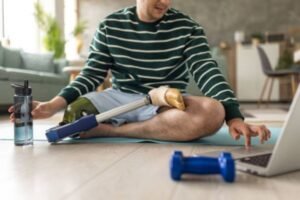
Before deciding how often to exercise, what foods to eat, or what should be added to your morning routine, consider what you actually want your wellness plan to help you do.
Maybe you want enough energy to return to work. Perhaps you want to walk comfortably through a grocery store, spend more time with your grandchildren, travel again, use your prosthesis for longer periods, sleep more consistently, or feel less overwhelmed by the logistics of daily prosthetic care.
These personal goals matter because wellness habits are easier to maintain when they support something meaningful.
Instead of beginning with “I need to exercise more,” you might begin with “I want enough strength and endurance to attend my daughter’s activities without feeling completely exhausted afterward.”
That shift gives the wellness habit a purpose.
Rehabilitation guidance also recognizes that life after amputation involves much more than learning how to use a prosthesis. The current VA/DoD rehabilitation guideline emphasizes health, function and ongoing management throughout rehabilitation, while VA resources encourage returning to meaningful activities, building support systems, and working with the appropriate members of the healthcare team as needs change. (Health Quality)
Your wellness plan should therefore reflect your definition of a meaningful life rather than someone else’s definition of successful recovery.
Build Your Wellness Plan Around Your Real Life After Limb Loss
A wellness plan that only works on your best days will probably become frustrating.
Life after limb loss can involve unpredictable variables. Your socket may feel different by late afternoon. Heat may increase sweating. Poor sleep may reduce your energy. Phantom sensations or residual limb pain may make movement harder. A busy medical week may leave little time for structured exercise.
Rather than expecting exactly the same performance every day, create different versions of your routine.
On a higher-energy day, you might complete your planned exercise, prepare meals, run errands and spend time socially.
On a moderate-energy day, you might shorten your exercise, prioritize essential tasks and leave more recovery time between activities.
On a difficult day, wellness could simply mean checking your residual limb, eating adequately, taking prescribed medication, staying hydrated, completing necessary hygiene and allowing your body to rest.
That is still a wellness plan.
This approach is consistent with Lifelong Prosthetics’ philosophy that wellness should adapt to the reality of the day rather than creating additional pressure. Their Daily Wellness Method specifically recognizes that pain, energy, prosthetic comfort and emotional needs can change throughout the day. (Lifelong Prosthetics)
Flexibility does not mean abandoning your goals. It means creating more than one reasonable way to reach them.
Make Movement Support Your Life After Limb Loss
Physical activity can support cardiovascular health, strength, mobility, sleep, mental health and independence. CDC guidance notes that adults with disabilities can benefit from physical activity, while current recommendations generally encourage 150 minutes of moderate-intensity aerobic activity each week plus muscle-strengthening activity when a person is able to do so safely. (CDC)
Those recommendations are useful guidelines, but life after limb loss requires individualization.
Your movement plan may include walking with a prosthesis, wheelchair mobility, swimming, cycling, seated exercise, stretching, strength training, balance exercises, household activity or exercises provided by a physical therapist.
You do not have to complete long workouts for movement to count. Short sessions spread throughout the day may be more realistic when fatigue, pain or prosthetic tolerance limits longer periods of activity.
Your physical therapist, physician, prosthetist or rehabilitation professional can also help you determine what activities are appropriate for your current health and mobility.
Strength and flexibility can be particularly important following lower-limb amputation. VA rehabilitation information, for example, describes exercises designed to maintain strength and range of motion in the residual limb and surrounding joints. (Veterans Health Library)
Movement should ultimately make your life more manageable, not leave you too exhausted to participate in it.
For additional mobility guidance, Lifelong Prosthetics’ article Why It’s Okay to Look Down: Walking Safely and Confidently as a Leg Amputee offers a practical perspective on navigating unfamiliar or uneven environments. (Lifelong Prosthetics)
Support Your Life After Limb Loss With Nutrition, Hydration, and Sleep
Wellness is not limited to exercise. Eating, hydration and sleep can influence your energy, recovery and ability to manage everyday activities.
A complicated diet is not necessary for most people. Instead, focus on eating patterns that are realistic enough to maintain. NIDDK guidance encourages balanced meals that may include vegetables, fruits, whole grains and sources of protein while emphasizing that healthy habits should be sustainable over time. (NIDDK)
Your individual nutritional needs may be different if you have diabetes, kidney disease, cardiovascular disease, healing wounds or another medical condition. In those situations, guidance from your physician or a registered dietitian is especially important.
Hydration deserves attention as well. Keeping water accessible during your normal routine can make drinking regularly easier than relying on motivation alone.
Sleep should also be part of your wellness plan after limb loss. Pain, phantom sensations, stress, changes in activity and prosthetic concerns can sometimes interfere with rest. NIH guidance states that most adults generally need approximately seven to nine hours of sleep per night, although individual needs vary. (NHLBI, NIH)
If sleep problems remain persistent, especially when pain or another health problem is involved, discuss them with an appropriate healthcare professional rather than simply trying to “push through” fatigue.
Include Prosthetic Fit and Skin Care in Your Wellness Plan After Limb Loss
For people who use a prosthesis, wellness and prosthetic care cannot be separated easily.
A socket that rubs, pinches, feels unstable or creates excessive pressure can affect mobility, mood, concentration and willingness to stay active. Lifelong Prosthetics has also discussed how seemingly small prosthetic difficulties can accumulate into significant mental and physical fatigue. (Lifelong Prosthetics)
Make residual limb and skin awareness part of your normal routine rather than something you only think about when a problem becomes severe.
Notice unusual redness, blisters, open areas, swelling, drainage, changing pressure points or significant changes in comfort. If your prosthesis suddenly feels loose, painful or unusually difficult to control, it may be time to contact your prosthetist.
VA guidance similarly advises contacting a prosthetist when a prosthesis feels loose, rubs or pinches, and seeking healthcare attention for wounds, infection concerns, falls or injuries. (Veterans Health Library)
Cleaning liners and prosthetic components according to the manufacturer’s or prosthetist’s instructions can also become a predictable part of your daily routine.
The goal is not to become anxious about every small change. It is to recognize your normal baseline well enough to notice when something deserves professional attention.
Make Mental Wellness Part of Life After Limb Loss
A strong wellness plan should include your emotional health just as intentionally as your physical health.
Life after limb loss may involve grief, frustration, anxiety, altered body image, fear of falling, changes in relationships, financial stress, medical fatigue or concern about future independence.
There can also be an invisible mental workload associated with prosthetic use. Before leaving home, you may think about terrain, socket comfort, supplies, accessibility, transportation, bathrooms, walking distance, battery charge, weather and how much energy an activity will require.
Lifelong Prosthetics explores this experience in Amputee Mental Health: How Small Moments Can Derail a Day, where everyday prosthetic challenges are described as factors that can gradually increase physical and emotional fatigue. (Lifelong Prosthetics)
Mental wellness does not require maintaining a positive attitude every day.
It may mean noticing when frustration is building, taking a break before becoming overwhelmed, talking with someone you trust, journaling, spending time outside, practicing relaxation, setting boundaries or seeking professional counseling.
Your emotional needs may change over time. An issue that felt manageable six months ago can become difficult again after a fall, health change, prosthetic problem, anniversary or stressful life event.
A useful wellness plan gives you permission to respond to those changes rather than judging yourself for having them.
Use Support Without Giving Up Your Independence
Independence after limb loss does not mean doing everything without help.
Sometimes the most effective wellness decision is knowing which problems you can manage independently and which deserve support.
Your healthcare and rehabilitation team may include physicians, prosthetists, physical therapists, occupational therapists, mental health professionals and other specialists depending on your circumstances. Comprehensive amputation programs likewise use multidisciplinary teams because physical function, prosthetic care, pain, emotional health and participation in everyday life are interconnected. (Rehab VA)
Support can also come from family members, friends and other amputees.
The key is choosing support that increases your confidence rather than taking control away from you.
You might ask a family member to help with transportation while still making your own healthcare decisions. You might talk with another amputee about practical experiences while still recognizing that their prosthetic solution may not be appropriate for your body.
You can also seek non-clinical guidance when you need help making sense of questions, preparing for conversations with providers or organizing your goals.
Lifelong Prosthetics’ amputee coaching is built around lived and professional prosthetic experience and is intended to help bridge the information and support gap that can sometimes exist between appointments. (Lifelong Prosthetics)
Support should give you more tools for managing your life, not make you feel less capable of directing it.
Review and Adjust Your Wellness Plan After Limb Loss
The plan that works for you today may not be the plan you need six months from now.
Your body can change. Your residual limb may change. Your prosthetic components may change. Your work schedule, family responsibilities, mobility, pain levels and personal priorities may change too.
Build review into your wellness plan.
Every few weeks, consider what is helping and what consistently feels unrealistic. Look for patterns rather than judging individual bad days.
Perhaps your exercise routine works well but your mornings are too rushed for it. Moving activity to the afternoon may solve the problem.
Maybe you repeatedly skip meal preparation because appointments leave you exhausted. Keeping a few simple meals available could make healthy eating easier.
Perhaps you are becoming less active because your socket has gradually become uncomfortable. That is not necessarily a motivation problem; it may be a prosthetic issue that deserves evaluation.
Behavior-change guidance from NIDDK recognizes that developing healthier habits is an ongoing process involving preparation, action and maintenance rather than a single decision. (NIDDK)
Think of your wellness plan the same way.
Track only information that helps you make better decisions. You might notice energy levels, sleep, activity, pain, skin issues, prosthetic wear time or emotional stress. You do not need an elaborate spreadsheet. A few notes on your phone or calendar may be enough to reveal useful patterns.
The best wellness plan after limb loss is not the most detailed one. It is the one you can continue adapting as your life changes.
Final Thoughts
Creating a wellness plan that works with your life after limb loss is ultimately about learning how to support yourself without expecting every day to look the same.
Your plan can include movement, nutrition, hydration, sleep, skin care, prosthetic management, emotional health, meaningful relationships, medical care and activities that give your life purpose. Some parts may require daily attention, while others only need occasional review.
The most important question is not whether your routine looks impressive. It is whether it helps you live your life with greater comfort, confidence, health and independence.
Start with what matters most to you. Choose a few manageable habits. Pay attention to how your body responds. Modify your routine when pain, energy, prosthetic fit or circumstances change. Ask for professional guidance when something falls outside what you can reasonably manage yourself.
Life after limb loss is not a fixed rehabilitation program with one finish line. It is an ongoing process of learning, adjusting and finding approaches that work for your body and your priorities.
You can explore more practical articles about mobility, prosthetic care, mental health, pain management and everyday amputee life through the Lifelong Prosthetics Resource Center. The site combines lived experience with professional prosthetic knowledge to help people navigate the everyday realities of limb loss with greater understanding and confidence. (Lifelong Prosthetics)
A wellness plan does not need to change your entire life at once. It needs to help you care for the life you are living today—and remain flexible enough to grow with you tomorrow.