

Emotional Wellness for Amputees is closely connected to physical health and everyday comfort. Living with limb loss involves much more than learning how to move differently. Physical comfort, mobility, pain, energy, sleep, confidence, stress, and emotional adjustment can influence one another every day. When one area becomes difficult, another may be affected. In the same way, improving one part of your health can sometimes make other parts of daily life feel more manageable.
For amputees, physical health and emotional wellness are closely connected. A painful residual limb may make it harder to sleep. Poor sleep can affect patience, concentration, motivation, and mood. An uncomfortable prosthetic socket may reduce activity and social participation. On the other hand, comfortable mobility, supportive relationships, realistic routines, and appropriate physical activity may help create a greater sense of confidence and control.
This connection does not mean every difficult emotion has a physical cause, or that exercise and self-care can solve every mental health concern. Emotional adjustment after amputation is personal and may include grief, anxiety, frustration, relief, pride, uncertainty, or several feelings at the same time.
Understanding the relationship between the body and mind can help you recognize what you need rather than judging yourself for having a difficult day. The goal is not perfect physical or emotional health. It is learning how to support your whole well-being as your needs change.
Emotional Wellness for Amputees: Why Physical and Emotional Health Are Closely Connected After Amputation
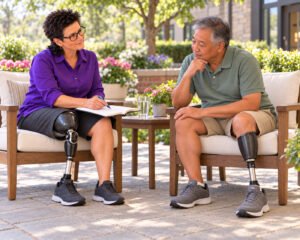
Amputation creates physical changes, but the effects often reach into many areas of life. Mobility may change. Everyday activities may require more planning. Pain or fatigue can interfere with work, recreation, relationships, and independence. At the same time, emotional stress may influence sleep, motivation, attention, and how manageable physical challenges feel.
The National Institute of Mental Health explains that physical and mental health can influence one another, particularly for people managing ongoing health conditions. Understanding this relationship can encourage a more complete approach to wellness rather than treating the body and emotions as entirely separate concerns. (National Institute of Mental Health)
After limb loss, this means paying attention to both physical symptoms and emotional responses. If you are feeling discouraged, it may be useful to consider whether pain, fatigue, poor sleep, a prosthetic problem, or another health concern is contributing. If physical activity has decreased, emotional stress or fear may also be part of the reason.
LifeLong Prosthetics explores this broader approach in The Amputee Daily Wellness Method™: Living Well With Limb Loss, which encourages amputees to notice physical and emotional needs and choose realistic actions based on the day they are actually having. (Lifelong Prosthetics)
Emotional Wellness for Amputees: How Pain Can Influence Mood, Sleep, and Motivation
Pain can take up a significant amount of physical and mental energy. Residual limb pain, phantom limb pain, pressure from a prosthesis, joint discomfort, back pain, or another medical condition may affect concentration, sleep, social participation, and motivation.
The Veterans Health Administration emphasizes that pain should be addressed with the amputation care team rather than simply tolerated, because uncontrolled pain can become a barrier to function and rehabilitation. (Veterans Health Library)
Pain may also create emotional uncertainty. You might wonder whether an activity will make symptoms worse, whether you will be able to finish an outing, or whether your prosthesis will remain comfortable throughout the day. Repeated experiences like these can lead to frustration or avoidance.
Instead of automatically pushing through discomfort, try to observe patterns. Notice where the pain occurs, what it feels like, when it develops, and what makes it better or worse. Share persistent or changing symptoms with the appropriate healthcare professional.
LifeLong Prosthetics discusses practical approaches to pain, energy, skin health, and mobility in Daily Self-Care for Amputees: Managing Pain, Energy, and Mobility. (Lifelong Prosthetics)
When pain is treated as meaningful information rather than a personal weakness, it becomes easier to make decisions that protect both physical health and emotional wellness.
Movement Supports More Than Physical Function
Physical activity can support strength, balance, cardiovascular health, mobility, and daily function. It may also support emotional well-being.
The CDC’s physical activity guidance for people with disabilities notes that physical activity can contribute to better mental health and may help reduce symptoms of depression and anxiety. The CDC also emphasizes that activity can be adapted to individual abilities and that some activity is better than none. (CDC)
For an amputee, movement does not have to mean walking long distances or completing intense workouts. Depending on your health, rehabilitation stage, mobility method, and professional recommendations, movement might involve stretching, strengthening exercises, wheelchair mobility, swimming, adaptive sports, household activity, or exercises prescribed by a physical therapist.
The important question is not how your activity compares with someone else’s. It is whether the movement is appropriate and useful for you.
Physical activity can also create opportunities beyond exercise itself. Returning to a favorite activity may reconnect you with friends. Practicing a mobility skill may make an outing feel more achievable. Improved strength or endurance may reduce the amount of effort required for certain daily tasks.
Start according to your current abilities and discuss new activity plans with your healthcare or rehabilitation team when appropriate.
Prosthetic Fit and Skin Health Can Affect Emotional Confidence
A prosthesis is not simply a piece of equipment. When it is part of daily mobility, changes in comfort or fit can influence plans, routines, confidence, and social participation.
A socket that causes pressure, friction, instability, or skin irritation may make walking uncomfortable. Repeated problems can also create uncertainty about leaving home or committing to activities because you may not know how long the prosthesis will remain comfortable.
Skin health can have similar effects. Persistent redness, wounds, blisters, sweat-related irritation, or other residual limb problems may temporarily reduce prosthetic wear and require changes to your normal routine.
These situations can be emotionally frustrating, particularly when they interfere with plans you were looking forward to.
Try not to interpret a difficult prosthetic day as evidence that you are losing progress. Bodies change. Residual limb volume can fluctuate, components can require adjustment, and health or activity changes can affect fit.
Contact your prosthetist or healthcare professional when fit problems, pain, wounds, or repeated skin concerns occur rather than repeatedly trying to tolerate them.
Protecting your body can also protect confidence. The goal is not wearing a prosthesis for the greatest possible number of hours. It is having mobility options that help you participate safely and meaningfully in your life.
Sleep, Fatigue, and Stress Can Create a Difficult Cycle
Sleep is another important connection between physical health and emotional wellness for amputees.
Pain or phantom sensations can interfere with rest. Stress about health, finances, mobility, appointments, accessibility, or prosthetic problems may make it difficult to relax. Poor sleep can then leave you with less physical and emotional energy the following day.
Fatigue may affect concentration, balance, patience, motivation, and your ability to manage normal frustrations. Tasks that are usually manageable can feel significantly harder when you are exhausted.
This is why rest should be viewed as part of health management rather than something you earn only after completing everything else.
Pay attention to recurring patterns. If several poor nights of sleep are followed by increased pain, irritability, anxiety, or difficulty concentrating, that information may help you make adjustments and have more productive conversations with your healthcare team.
Consider building periods of recovery into demanding days. You may also benefit from simplifying tasks, preparing prosthetic supplies in advance, asking for help, or changing plans when your energy is unusually low.
Persistent sleep problems, major changes in energy, or symptoms affecting daily function deserve professional evaluation rather than automatically being attributed to amputation.
Nutrition, Hydration, and Everyday Physical Care Matter
Emotional wellness is sometimes discussed as though it exists only in the mind, but basic physical needs can influence how you experience the day.
Regular meals, adequate hydration, appropriate medical care, medication management, skin care, movement, and rest create a foundation from which other coping strategies become easier to use.
When you are tired, hungry, dehydrated, uncomfortable, or dealing with unmanaged pain, ordinary challenges may require more effort. This does not mean every emotional reaction can be fixed by eating a meal or drinking water. It simply means physical needs deserve attention when considering your overall well-being.
Try creating a brief daily body check-in. Notice your residual limb, sound limb, skin, energy, pain, prosthetic comfort, sleep, and general physical condition before setting expectations for the day.
This type of check-in is also useful because needs can change. A routine that worked several months ago may need adjustment after a change in health, activity level, weight, medication, prosthetic equipment, or responsibilities.
Whole-person wellness depends less on following a perfect schedule and more on noticing changes early enough to respond appropriately.
Social Connection and Support Strengthen Whole-Person Wellness
Physical health challenges can sometimes lead to social withdrawal. Pain, fatigue, concerns about accessibility, fear of falling, prosthetic difficulties, or unwanted attention may make staying home feel easier.
Occasional rest and privacy can be healthy. Long-term isolation, however, may make emotional adjustment more difficult for some people.
Connection does not need to involve large social events. A conversation with a trusted friend, a short visit, an online amputee community, an adaptive activity, or peer support may provide encouragement and practical understanding.
The Amputee Coalition offers peer support, support groups, healthcare navigation, mental health resources, and other services for people with limb loss and limb difference. (Amputee Coalition)
LifeLife Prosthetics also explores the role of relationships, identity, self-advocacy, and community in Building Confidence After Limb Loss: Identity, Relationships, and Support. (Lifelong Prosthetics)
Support should not remove your choices. Helpful relationships allow you to explain what you need, accept assistance when useful, decline it when it is not, and participate without being pressured to prove your independence.
Emotional Wellness Deserves the Same Attention as Physical Rehabilitation
Rehabilitation often has visible goals. You may work toward transferring safely, improving balance, increasing strength, using a prosthesis, returning to work, driving, or participating in activities again.
Emotional recovery is less visible, but it matters just as much.
Grief, anxiety, anger, uncertainty, body-image concerns, frustration, or changes in identity may occur after amputation. These emotions do not necessarily follow the same timeline as physical healing.
A person can make excellent physical progress while still struggling emotionally. Someone else may feel emotionally stable but become discouraged when pain or prosthetic problems interrupt mobility.
LifeLong Prosthetics discusses these experiences in Mental Health After Amputation: Coping With Grief, Anxiety, and Change, emphasizing that emotional adjustment is individual and may continue through different stages of life after limb loss. (Lifelong Prosthetics)
If anxiety, depression, trauma symptoms, grief, or other emotional concerns become persistent, overwhelming, or interfere with daily life, consider speaking with a qualified mental health professional. Emotional health deserves professional care when needed, just as physical symptoms do.
Build a Daily Routine That Supports Both Body and Mind
Supporting physical health and emotional wellness for amputees does not require an elaborate routine.
Start by asking a few practical questions each day. How is your body feeling? How is your residual limb? Is your prosthesis comfortable? How much energy do you have? What is your mood like? What deserves attention today?
Your answers can guide your priorities.
On a higher-energy day, wellness may involve rehabilitation exercises, errands, work, recreation, or seeing friends. On a difficult day, success may mean caring for your skin, eating regularly, staying hydrated, using a different mobility method, attending an important appointment, resting, or asking someone for assistance.
A flexible routine prevents wellness from becoming another standard you feel pressured to meet.
You can find additional practical guidance throughout the LifeLong Prosthetics Resource Center, where topics include amputee health, mental health, pain management, prosthetic socket fitting, self-care, mobility, and coaching. (Lifelong Prosthetics)
The most useful routine is one that responds to your actual health and circumstances. Consistency can help, but adaptability matters too.
Final Thoughts
The connection between physical health and emotional wellness for amputees is not always obvious until one area begins affecting another. Pain can influence sleep and mood. Fatigue can affect motivation and mobility. Prosthetic problems can change confidence. Stress can make everyday physical demands feel more difficult. Supportive movement, appropriate rest, comfortable mobility, meaningful relationships, and responsive healthcare can help create a stronger foundation for overall well-being.
There is no single formula for living well after amputation. Your needs may change from day to day and throughout different stages of your life.
Rather than expecting yourself to feel physically strong and emotionally positive all the time, pay attention to what your body and mind are communicating. Address problems early. Adjust plans when necessary. Ask questions during medical and prosthetic appointments. Accept support that respects your choices.
Most importantly, remember that physical rehabilitation and emotional wellness do not have to be treated as separate journeys. Caring for both can help you build a life after limb loss that supports comfort, confidence, participation, and a greater sense of control.
LifeLong Prosthetics provides independent, non-clinical amputee coaching and support designed to help individuals and families navigate practical challenges, communicate with care teams, identify useful resources, and work toward personal goals. Coaching can complement appropriate medical, prosthetic, rehabilitation, and mental health care but does not replace professional diagnosis or treatment.