

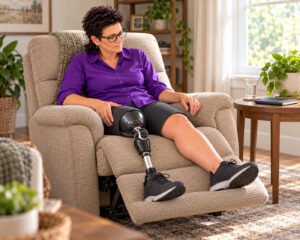
Living with limb loss often means learning new ways to move, work, rest, and care for your body. For some people, pain becomes less noticeable during recovery. For others, chronic pain after amputation becomes an ongoing part of daily life. It may feel like aching in the residual limb, burning or electric sensations, pressure from a prosthetic socket, pain that seems to come from the missing limb, or discomfort in the back, hips, shoulders, or sound limb.
Chronic pain after amputation can be difficult because it is not always predictable. Activity, sleep, stress, skin condition, residual-limb volume, prosthetic fit, and overall health can all influence how a person feels. Pain may also affect confidence, concentration, mood, social plans, and energy.
Understanding possible sources of pain is an important first step. Pain should not automatically be ignored simply because an amputation happened months or years ago. With appropriate medical, prosthetic, rehabilitation, and emotional support, many people can develop practical ways to respond to pain, manage flare-ups, and protect their quality of life.
Understanding Chronic Pain After Amputation
Chronic pain after amputation is a broad description rather than one diagnosis. Pain may come from the residual limb, the nervous system, the prosthetic interface, muscles and joints, or several factors at once. Mayo Clinic explains that residual limb pain is different from phantom pain, although some people experience both. (Mayo Clinic)
That distinction matters because different causes may need different approaches. Burning or electric sensations may involve nerves. Localized pressure during prosthetic use may point toward fit or skin problems. Aching in the back or sound limb may be associated with compensation or overuse. Pain perceived in the missing limb may be phantom limb pain.
For practical guidance on health, mobility, comfort, and daily life after limb loss, the Lifelong Prosthetics Resource Center offers information shaped by both professional knowledge and lived experience.
Why Chronic Pain After Amputation Can Change From Day to Day
Many amputees notice that pain is not constant. It may increase after a demanding day, during poor sleep, after unusual activity, or when a prosthesis feels different. Heat, sweating, swelling, residual-limb volume changes, and skin irritation can also affect comfort inside a socket.
A daily body check-in can help. Before deciding how much activity is realistic, notice your pain, skin condition, prosthetic comfort, energy, sleep, and emotional stress. The goal is not to become overly focused on symptoms. It is to recognize meaningful changes early enough to respond.
The Amputee Daily Wellness Method™ encourages a flexible approach to daily health. It focuses on adapting self-care and activity to the reality of the day instead of forcing the same routine regardless of pain or fatigue. (Lifelong Prosthetics)
Residual Limb Pain, Phantom Limb Pain, and Nerve Pain
Residual limb pain is felt in the part of the limb that remains. The Veterans Health Library describes several possible sources, including skin sensitivity, nerve pain, muscle pain, bone pain, and discomfort related to prosthetic pressure. A neuroma, which can develop where a cut nerve heals, is another possible source of nerve pain. (Veterans Health Library)
Phantom limb pain is different. It is pain perceived in the part of the limb that is no longer present. Cleveland Clinic notes that phantom pain can occur along with non-painful sensations such as pressure, itching, temperature, or movement. Pain may be described as burning, cramping, stabbing, shooting, twisting, or electric. (Cleveland Clinic)
These sensations are real even though the limb is no longer present. Because post-amputation pain can have overlapping causes, describing where the pain is felt, what it feels like, how long it lasts, and what seems to trigger it can help a clinician decide what should be evaluated.
How Prosthetic Fit Can Contribute to Chronic Pain After Amputation
A prosthesis should support function, but it should not be something you feel required to tolerate at any cost. Socket fit can change as the residual limb changes. Volume may fluctuate with activity, temperature, weight, health, and time since amputation. A prosthesis that once felt comfortable may eventually need adjustment.
Prosthetic-related pain may appear as concentrated pressure, rubbing, pinching, burning, skin irritation, or movement inside the socket. Cleveland Clinic notes that improper fit can contribute to chafing and pressure sores, while residual or phantom pain can make prosthetic use more difficult. (Cleveland Clinic)
If discomfort repeatedly appears in the same area, worsens with wear time, or leaves persistent redness or broken skin, contact your prosthetist instead of repeatedly pushing through it. Fit problems can also affect walking mechanics and increase strain elsewhere.
Lifelong Prosthetics explores the connection between socket discomfort, confidence, and emotional fatigue in Amputee Mental Health: How Small Moments Can Derail a Day. (Lifelong Prosthetics)
Coping Strategies for Chronic Pain After Amputation
Coping with chronic pain after amputation often works best when you build a personalized collection of strategies rather than search for one perfect solution. Depending on the cause, a care team may consider medication, physical or occupational therapy, prosthetic adjustment, desensitization, graded movement, psychological support, or other treatments.
Some people with phantom limb pain may be guided through mirror therapy. The NHS describes mirror visual feedback as a technique that creates the visual impression of the missing limb, and VA guidance also discusses approaches such as gentle touch, massage, compression, and prosthetic use for some phantom sensations. These techniques are not right for every person or every type of pain, so professional guidance matters. (nhs.uk)
Tracking patterns can also be helpful. A simple pain diary can record when pain occurs, its location and intensity, what you were doing beforehand, how the prosthesis felt, and what made the pain better or worse. Over time, this can provide useful information for your healthcare or prosthetic team.
During a flare-up, pacing may be more sustainable than forcing yourself through a full schedule. Alternating activity with recovery can help reduce the cycle of doing too much on a better day and struggling afterward.
Supporting Mental Health With Chronic Pain After Amputation
Persistent pain affects more than the body. It can make decisions harder, interrupt sleep, reduce patience, limit social activity, and create uncertainty about plans. When every outing involves thinking about walking distance, accessibility, prosthetic comfort, medication, and energy, the mental load can become significant.
Chronic pain may also bring frustration, sadness, grief, anxiety, or fear of the next flare-up. These emotional effects do not make the physical pain less real. Physical symptoms and emotional well-being can influence each other, and both deserve appropriate support.
Helpful options may include talking with someone you trust, working with a mental health professional, connecting with other amputees, or using non-clinical coaching to work through everyday challenges. Lifelong Prosthetics’ mental health resources reflect the reality that small mobility and prosthetic difficulties can accumulate into emotional fatigue. (Lifelong Prosthetics)
If pain is causing persistent hopelessness, withdrawal from valued activities, or major changes in daily functioning, discuss this with a healthcare professional. Supporting mental health can be an important part of living more effectively with chronic pain after amputation.
Building a Sustainable Routine for Pain Management After Amputation
A sustainable routine should work with your current capacity. On a lower-pain day, you may be able to exercise, work, run errands, and spend time with others. On a higher-pain day, protecting your skin, reducing unnecessary walking, using a mobility aid, resting, or asking for help may be more appropriate.
Daily habits can support pain management without turning life into a medical checklist. Give yourself enough time when putting on a prosthesis. Check the residual limb and liner for unusual areas. Keep supplies easy to reach. Plan recovery after demanding activities. Pay attention to footwear, walking surfaces, and the condition of the sound limb.
Movement can still be valuable, but it should match your health and ability. Strength, flexibility, balance, and efficient movement patterns may help reduce unnecessary strain when recommended by your rehabilitation team. For lower-limb amputees, Why It’s Okay to Look Down offers practical ideas for navigating uneven surfaces and everyday hazards with greater awareness. (Lifelong Prosthetics)
A flexible routine is not a lesser routine. It is a way of staying engaged in life while respecting what your body needs today.
When Chronic Pain After Amputation Needs Professional Evaluation
Ongoing or changing pain should not automatically be accepted as “normal for an amputee.” Seek professional evaluation when pain is new, rapidly worsening, interfering with sleep or daily function, preventing prosthetic use, or repeatedly returning without a clear explanation.
Contact a healthcare professional promptly if you notice open skin, drainage, increasing redness, unusual swelling, warmth, fever, a sudden residual-limb change, or other possible signs of infection. Severe new nerve-like pain, suspected neuroma pain, persistent bone pain, or significant changes in prosthetic fit also deserve assessment.
Mayo Clinic’s residual limb pain guidance explains that treatment depends on the underlying cause and may involve medicines, therapies, or procedures. Care may involve a physician, prosthetist, physical therapist, occupational therapist, pain specialist, mental health professional, or other rehabilitation specialist. (Mayo Clinic)
For additional education and non-clinical support, Lifelong Prosthetics provides amputee coaching designed to help people understand options, communicate concerns, and navigate life after amputation alongside their healthcare team. (Lifelong Prosthetics)
Final Thoughts
Living with chronic pain after amputation can require ongoing adjustment. Pain may be physical, neurological, prosthetic, musculoskeletal, or a combination of several factors. It can change from day to day and influence much more than mobility. Sleep, confidence, relationships, concentration, work, and emotional energy may all be affected.
A useful approach is to become curious about patterns rather than simply trying to endure them. Notice where pain occurs, what it feels like, when it changes, how your prosthesis fits, and what helps. Bring those observations to the professionals supporting your care. A socket adjustment, rehabilitation change, medical evaluation, pain-management strategy, or mental health conversation may address an important part of the problem.
Coping with chronic pain after amputation does not mean pretending pain is easy or expecting yourself to function the same way every day. It means building a flexible support system around the life you actually live. Small choices such as checking your skin, pacing activity, requesting a prosthetic adjustment, using a mobility aid, resting before exhaustion, or reaching out for support can help protect comfort and independence.
Lifelong Prosthetics approaches life after limb loss through professional knowledge and lived experience. Explore the Resource Center for more guidance on pain management, mental health, prosthetic challenges, mobility, and everyday wellness, and contact your healthcare team whenever pain is new, persistent, or changing.