
Building Confidence After Limb Loss is rarely a single breakthrough. It is a gradual process shaped by recovery, changing abilities, relationships, access, and available support.
Building confidence does not require constant positivity, total independence, or prosthetic use. It can mean asking a question, trying an adapted activity, setting a boundary, accepting help, or leaving an unsafe situation.
Limb loss may affect how you see your body, describe yourself, and experience relationships. Familiar roles can change, and public spaces may feel less predictable, whether an amputation is recent or happened years ago.
There is no correct timeline. Progress can coexist with fear, grief, frustration, or self-consciousness. The goal is to build enough trust in your choices and support system to participate in life meaningfully.
Understand Building Confidence After Limb Loss: What Confidence Really Means
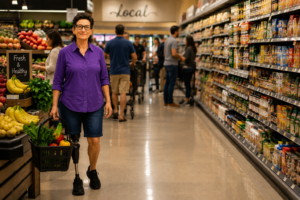
Building confidence after limb loss is not fearlessness. Confident people still notice risk and discomfort, but learn to respond with information, preparation, and self-trust.
Building confidence may mean entering a busy store with a prosthesis, using a wheelchair without apologizing, explaining access needs, or declining an intrusive question.
Your definition should reflect your life. Prosthetic use, walking distance, athletic ability, and independence are not universal measures of Building confidence or worth.
Identify situations that feel manageable and those that create uncertainty. Practice, better equipment, accessibility information, support, or permission to leave early may help.
Building confidence grows when you keep small promises to yourself. A realistic action can be more useful than an impressive goal that ignores current health or energy.
Rebuild Identity Without Losing Yourself
An amputation can alter routines and roles without erasing who you were. Your values, relationships, knowledge, humor, and history remain, even when activities change.
You also do not need to pretend limb loss has no influence. Some identify strongly with the amputee community; others see it as one part of a larger identity. Both are valid.
Separate what matters from how you once expressed it. Purpose from work may continue through another role. Adapted recreation may restore competition or community. Caregiving can continue even when physical tasks require help.
Lifelong Prosthetics reflects on adaptation and purpose in Every Day Is My Amputee Rehab. Identity can expand without denying what changed.
You can revise goals, discover interests, and define progress. Rebuilding identity means making room for who you are now, not recreating your old self.
Approach Body Image at Your Own Pace
Body image after amputation can involve grief, discomfort, pride, neutrality, or mixed emotions. You do not have to love every change before living confidently.
Mirrors, photographs, clothing, intimacy, public attention, or prosthetic fit may bring strong reactions. These feelings are not vanity or ingratitude. Adjustment takes time.
Begin with choices that provide control. Decide what clothing feels comfortable, who may see or touch your residual limb, and what you want to explain. Strangers are not owed medical details.
Focus on what your body communicates and enables. Caring for skin, responding to pain, choosing safe mobility, and resting when needed are forms of respect.
If distress about appearance persists or interferes with relationships and daily life, a qualified mental health professional can help. Body Building confidence need not develop alone.
Redefine Independence and Ask for What You Need
Independence is often presented as doing everything without assistance. That definition can create unnecessary pressure after limb loss and may encourage people to hide pain, avoid mobility aids, or attempt unsafe tasks.
A more useful definition is having choice and control. You can be independent while using a prosthesis, wheelchair, walker, personal assistance, adaptive equipment, or transportation support. Asking for help can be an intentional decision rather than evidence of failure.
Self-advocacy is part of Building confidence. During appointments, describe what you experience instead of minimizing it. Ask why a recommendation is being made, request clear instructions, and speak up when a prosthesis, treatment plan, or rehabilitation goal does not fit your needs.
The same principle applies in public and professional settings. You can request accessible seating, extra time, a different route, rest breaks, or another reasonable adjustment. Practice a simple statement in advance so you do not have to find the words while stressed.
Safe decisions also build confidence. Lifelong Prosthetics explains in Why It’s Okay to Look Down that checking terrain can be a practical mobility strategy. Building Confidence is not ignoring risk; it is using awareness and available tools to manage it.
Communicate Through Changes in Relationships
Limb loss can change relationship dynamics. Partners, relatives, friends, and coworkers may want to help but not know what is useful. Some may become overprotective, while others may underestimate the effort required for everyday tasks.
Clear communication can reduce misunderstandings. Explain whether you need listening, practical assistance, encouragement, privacy, or time alone. Instead of hoping someone will guess, make a specific request such as asking them to check before helping or to attend an appointment and take notes.
Boundaries matter as much as support. You can decline questions, stop a conversation about your body, or tell someone that a joke is not welcome. You can also change your mind about how much you want to share.
Intimate relationships may require conversations about comfort, body image, positioning, pain, and fear of rejection. These discussions can feel vulnerable, but moving slowly and communicating openly may help both people understand what feels safe and supportive. A couples counselor or qualified therapist may help when conversations become difficult.
Relationships may change, and some may become stronger through honest communication. The goal is not to protect everyone else from discomfort. It is to create relationships in which your dignity, choices, and needs are respected.
Return to Social Life in Manageable Steps
Social situations can feel different after limb loss. You may worry about staring, questions, accessibility, fatigue, falling, prosthetic noise, or being unable to keep up. Avoidance may feel protective, but long periods of isolation can make returning feel even harder.
Choose a manageable first step rather than the most demanding event. Meet one trusted person, visit a familiar location, attend for a shorter time, or arrange transportation that lets you leave when needed. Check parking, entrances, seating, restrooms, terrain, and walking distance in advance.
Prepare a response for questions if that helps. You might offer a brief explanation, redirect the conversation, or say that you prefer not to discuss it. The person asking does not determine how much information you share.
Afterward, consider what went well and what you would change. Success does not require staying for the entire event or feeling relaxed every moment. Going, learning, and returning safely can all count as progress.
Repeated physical and mental challenges may reduce motivation. Amputee Mental Health: How Small Moments Can Derail a Day explains how everyday obstacles can create emotional fatigue. Adjusting a plan because of energy, pain, or access is problem-solving, not giving up.
Find Strength Through Peer Support and Community
A peer may recognize concerns that are difficult to explain and share practical lessons without assuming that every journey is the same.
The Amputee Coalition Certified Peer Visitor Program connects people with trained volunteers who can listen, encourage, and share lived experience. Support groups, online communities, adaptive recreation, advocacy, and local disability organizations may provide additional connection.
Look for spaces that respect different amputation levels, causes, mobility choices, ages, cultures, and stages of adjustment. A helpful community should not pressure you to be inspirational, compare progress, or follow one definition of success.
You can participate quietly before deciding whether to share. Listening to others may provide language for your own experience and show that challenges with Building Confidence, relationships, equipment, and identity are not yours alone.
Over time, you may choose to support someone else, but this is never an obligation. Receiving support is valuable by itself. Community works best when there is room to ask questions, acknowledge hard days, and celebrate progress without pretending that life with limb loss is simple.
Use Professional and Coaching Support When Helpful
Building Confidence can be affected by pain, prosthetic fit, trauma, depression, anxiety, grief, inaccessible environments, or repeated negative experiences. Different concerns may require different kinds of support.
A prosthetist can assess device fit and function. Physical and occupational therapists can help with mobility, daily activities, and adaptations. A physician can evaluate medical concerns, while a licensed mental health professional can support persistent distress, trauma, relationship difficulties, or changes in self-image.
The National Institute of Mental Health explains that psychotherapy can help people explore troubling emotions, develop coping and communication skills, and address patterns that interfere with daily life. Seek qualified care if emotional symptoms persist, become overwhelming, or limit activities and relationships.
Amputee coaching serves a different role. It can provide practical, non-clinical guidance, goal support, self-advocacy, and help communicating with a care team. Lifelong Prosthetics offers independent amputee coaching and support grounded in lived and professional experience. Coaching does not replace medical treatment or psychotherapy.
In the United States, anyone experiencing emotional distress or thoughts of suicide can call or text the Suicide and Crisis Lifeline at 988. Contact emergency services if there is immediate danger.
This article provides general educational information and is not a substitute for individualized medical or mental health care.
Final Thoughts
Building confidence after limb loss is not about proving that nothing affects you. It is about understanding your needs, making informed choices, and developing relationships and resources that help you participate in life with greater trust in yourself.
Identity may change without disappearing. Independence can include assistance. Confidence can coexist with fear. Support can strengthen you without taking away control.
Choose one manageable action. Express a need, set a boundary, contact a peer, return to a valued activity, or ask a professional for guidance. Each choice offers information and creates an opportunity to build self-trust.
Some days feel easier. A setback, painful experience, or change in health does not erase the Building Confidence already developed. It may simply mean that the plan, equipment, environment, or support needs to change.
You do not have to navigate identity, relationships, and life after amputation alone. With patience, honest communication, and support that respects your goals, Building Confidence can grow in a way that is realistic, personal, and lasting.